How to choose the right interior designer in Miami
Because in a market where everyone claims to design, very few actually solve.
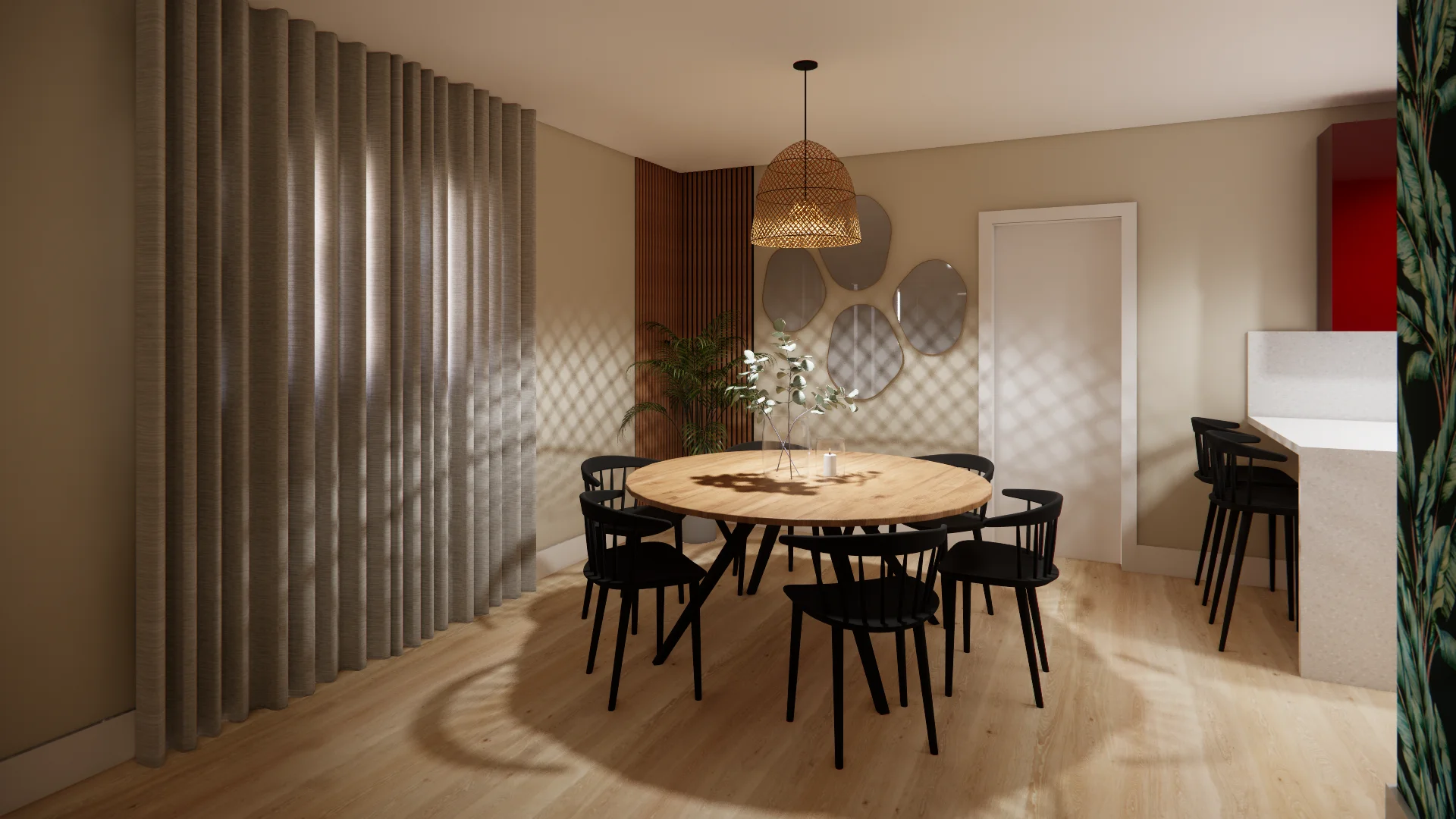
Choosing the right interior designer in Miami is not a matter of taste. It is a matter of alignment. The most important criteria are clarity of goals, a designer who thinks in terms of process rather than finishes, a portfolio that feels resolved instead of simply decorated, and knowledge of the local market. A serious designer provides structure, defined deliverables and transparent scope, and guides decisions from concept to execution. Carolini Interior Design Studio offers a 60-minute virtual consultation for $150 to help you define that direction before committing to a full project.
Miami is a city of aesthetics. Beautiful buildings, curated interiors and visually striking spaces are all part of the landscape. But behind that visual abundance lies a reality most clients do not anticipate: not all designers approach a space the same way.
Choosing the wrong one does not only affect how your property looks. It affects how it functions, how it is perceived and, ultimately, how it performs. Whether you are designing your home or developing a high-end short-term rental, selecting the right interior designer is not about taste alone. It is about alignment.
1. Start with clarity, not with inspiration
Most clients begin their search the same way: saving images, browsing Instagram and collecting references. Inspiration is useful, but it can also be misleading, because what you are seeing is an outcome and not the process behind it.
Before choosing a designer, ask yourself:
- What is the purpose of this space?
- Is it a personal residence or an investment property?
- What do I expect this space to do for me?
In Miami's competitive market, especially in luxury and short-term rentals, design is not only aesthetic. It is strategic. The clearer you are about your goals, the easier it becomes to identify a designer who can deliver them.
2. Look beyond the portfolio
A portfolio shows you what a designer has done. It does not show you how they think, and thinking is everything. Two designers may produce visually similar spaces through completely different processes. One may prioritize layout and functionality; the other may focus only on surface styling. The difference becomes obvious over time.
When reviewing a designer, pay attention to:
- Consistency in spatial quality, not just visual style
- How spaces are organized and how they flow
- Whether projects feel intentional or simply decorated
A strong portfolio is not just beautiful. It is resolved.
3. Understand their process (this is where most mistakes happen)
One of the most overlooked aspects when hiring a designer is their process. And yet, it is the process that determines how decisions are made, how problems are solved, how the project evolves, and whether the result feels cohesive or fragmented.
Ask questions like:
- Do you start with space planning or with finishes?
- How do you approach layout challenges?
- How involved are you during implementation?
- Do you provide purchasing and execution support?
In high-level design there is always a methodology behind every decision. If a designer cannot clearly articulate their process, they are likely improvising.
4. Distinguish between decoration and design
Decoration enhances a space. Design defines it. In a city like Miami, where visual trends move quickly, it is easy to mistake curated decor for actual design expertise. But true design goes deeper: it resolves layout inefficiencies, it improves circulation and usability, it aligns the space with its purpose and it creates a cohesive narrative.
If your project involves structural decisions, spatial reconfiguration or long-term investment goals, you do not need someone to make it pretty. You need someone to think through the space.
5. Choose someone who understands your market
Design is not universal. What works in New York does not necessarily work in Miami. What works for a personal residence does not work for a short-term rental. Miami has its own dynamics: a strong emphasis on lifestyle and experience, high expectations from both homeowners and guests, a saturated STR market where differentiation is critical, and a visual culture that values refinement but quickly exposes superficiality.
The right designer understands these nuances and knows how to create spaces that photograph well, perform well and maintain relevance over time. Because in Miami, perception is immediate and unforgiving.
Looking for a designer who listens before designing?
Book a 60-minute virtual consultation for $150 to discuss your project, goals and vision.
6. Evaluate how they communicate
Design is a collaborative process, and the way a designer communicates during the initial stages is often a reflection of how the entire project will unfold. Pay attention to how clearly they explain ideas, whether they ask the right questions, how they respond to uncertainty or constraints, and whether they guide or simply agree.
A strong designer does not just execute your vision. They refine it. They bring perspective, structure and clarity to decisions you may not have fully defined yet.
7. Be realistic about budget, and more importantly, about value
One of the most common mistakes clients make is evaluating designers primarily based on cost. But design is not a commodity. It is a multiplier. The right decisions can increase property value, improve functionality, enhance user experience and, in the case of investment properties, directly impact revenue. The wrong decisions can do the opposite, regardless of how much was spent.
Instead of asking "how much does it cost?", consider asking "what is the value of getting this right?".
8. Look for alignment, not just availability
The best designer for your project is not necessarily the most available one. It is the one whose approach aligns with your expectations, your standards and your long-term vision. This includes design philosophy, level of involvement, attention to detail and understanding of your goals.
When alignment is present, decisions become clearer, the process becomes smoother and the outcome feels intentional.
9. Trust expertise, but expect structure
Hiring a designer means trusting their expertise. But trust should not replace structure. A professional designer provides clear deliverables, defined timelines, a transparent scope of work and a roadmap from concept to execution. Without this structure, even the most visually appealing ideas can fall apart during implementation.
10. The final decision: it is not about who you like, it is about who you trust to decide
At the end of the day, choosing an interior designer is not just about aesthetics, personality or even experience. It is about decision-making. Because throughout the project, there will be dozens, if not hundreds, of decisions that shape the final result. And the real question becomes: who do you trust to make them?
Final thoughts
In a city like Miami, where design is everywhere, true differentiation is not achieved through decoration. It is achieved through clarity, intention and execution. Choosing the right interior designer is not about finding someone who shares your taste. It is about finding someone who can refine it.
Someone who understands that a space is not just meant to be seen, but to be experienced, remembered and, in many cases, to perform.
If you are ready to approach your space with that level of intention, then you are not just looking for a designer. You are looking for the right one.
Ready to work with a designer who thinks strategically?
Book a 60-minute virtual consultation for $150 and let us discuss your project.

Cecilia Carolini
Architect and interior designer specializing in luxury residential interiors and high-end short-term rentals in Miami. Focused on spaces that balance refined aesthetics with strategic performance.